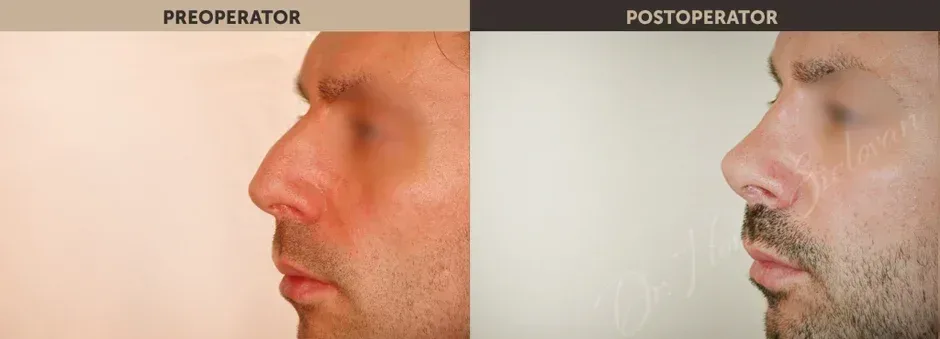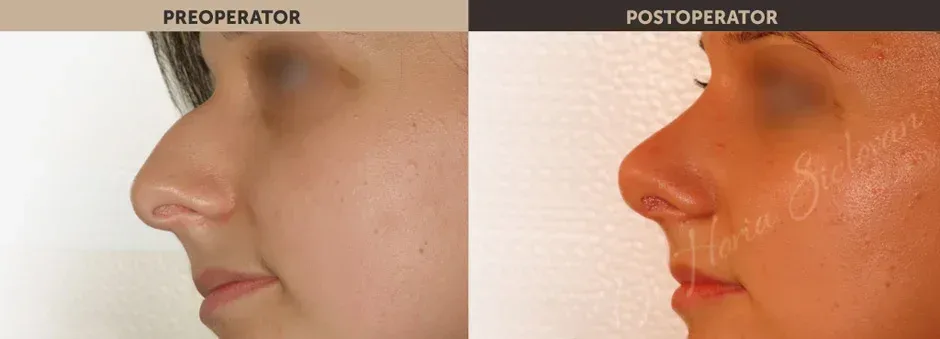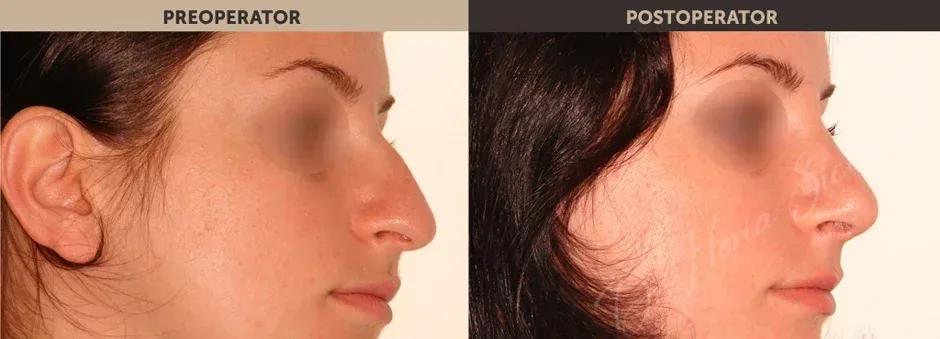
Purpose of the Procedure
Rhinoplasty aims to aesthetically modify the nose, targeting:
- Reduction or correction of the size of the nose (length)
- Reduction of the width of the nose (at the dorsal portion and nostrils)
- Improvement of the nasal profile – correction of a “bump” or dorsal depression
- Reshaping the tip of the nose
- Correction of the size and shape of the nostrils
- Reduction of nasal asymmetry
The procedure is recommended after facial growth is complete, usually from the age of 15.
Surgical Procedure
Rhinoplasty is a personalized procedure, tailored to each patient’s features to achieve a natural and balanced aesthetic result.
Depending on the needs, the plastic surgeon may use one or more of the following techniques:
- Reshaping the dorsal portion of the nose
- Reducing the length and width of the nose
- Modeling the nasal tip
- Reducing wide nostrils
- Changing the angle between the nose and the upper lip
The procedure can be performed through:
- Closed rhinoplasty – incisions are made inside the nose;
- Open rhinoplasty – the incision is placed at the columella, between the tip of the nose and the upper lip.
Through these incisions, the surgeon has access to the osteocartilaginous structures of the nose, which are reshaped to achieve the desired form.
Healing and Recovery
After the procedure, an external splint is applied, and an internal support may be placed to maintain nasal structures during healing.
Postoperative effects may include:
- Swelling (edema) and bruising
- Headache
- Local pain and discomfort – controlled with medication
Normal activities can be resumed a few days after surgery. The internal support is removed in 1–2 days, and the external splint in 7–14 days.
Complete healing occurs gradually over several weeks, during which the swelling decreases, and the new nasal contour is defined. It is important for the patient to avoid nasal trauma during the first 6 months after surgery.
Risks and Possible Complications
As with any surgery, rhinoplasty carries certain risks, including:
- Infections or bleeding
- Rupture of superficial blood vessels
- Reactions to anesthesia
- Unpredictable aesthetic results that may require a secondary correction
Results and Durability
The final result of rhinoplasty becomes visible gradually as the tissues fully heal. Usually, the definitive result is stable in about 12 months and is considered permanent.
Through his experience, Dr. Horia Șiclovan aims for a natural, balanced, and aesthetic result that restores the patient’s confidence and facial harmony.